
Congratulations to Jessica Winston who set the record for Utah W-E in the following categories: Female, 50-59, upright bike.
Utah, West to East — Women’s 50-59, Standard Bicycle WUCA Record Attempt Summary | May 24–25, 2026
This ride was a personal challenge to set a WUCA record crossing Utah, West to East, in the Women’s 50-59 standard upright bicycle category. While I’ve been cycling since I was young, my interest in longer rides took hold in 2023 when I set a goal to complete Lotoja, the 200-mile race from Logan, UT, to Jackson, WY. I’ve since completed five double centuries and, in fall 2025, as a solo rider, I also finished the Salt to Saint Relay, a 428-mile race from Salt Lake City to St. George.
As my interest in long-distance cycling has grown, I have found it heartening to watch increasing numbers of women competing in ultra-distance races, but it’s still relatively few compared with the numbers of men. One day, I came across the WUCA records and found few or no women’s records across many of the Western states. It occurred to me that I could start to fill that gap. I felt that the time I posted would be valuable as a first entry where there had been none, and it seemed worthwhile to give other women a mark to chase. I chose Utah West to East for its proximity and its relatively manageable length among the Western state options.
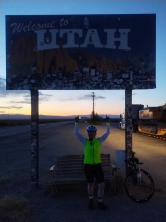
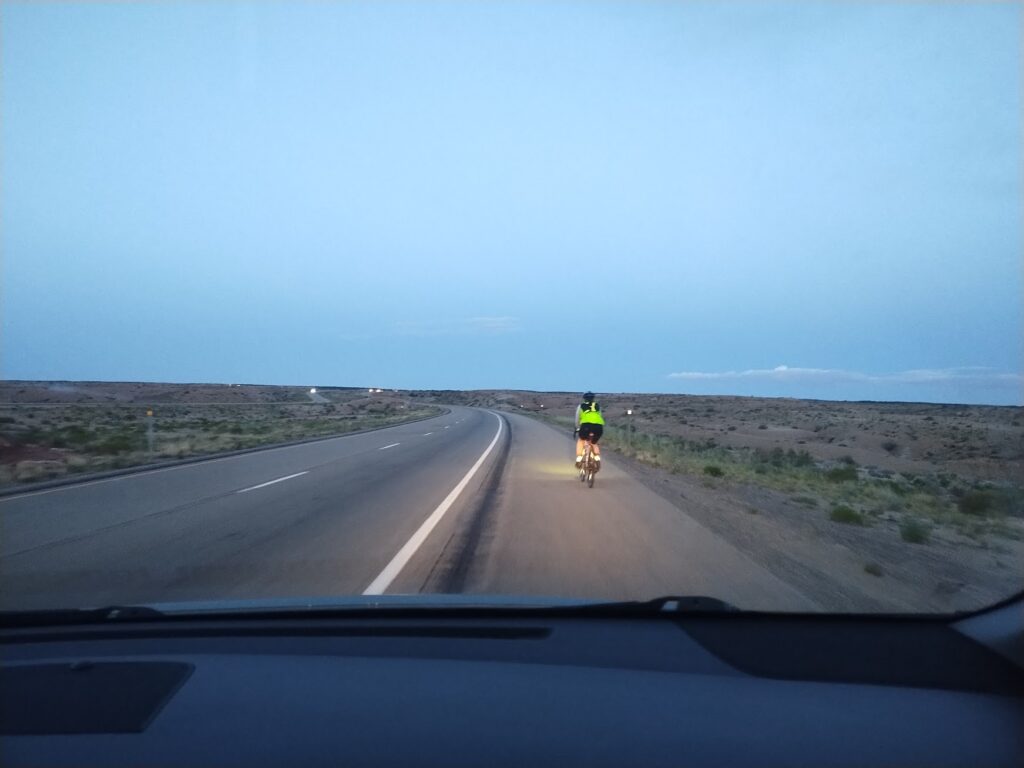
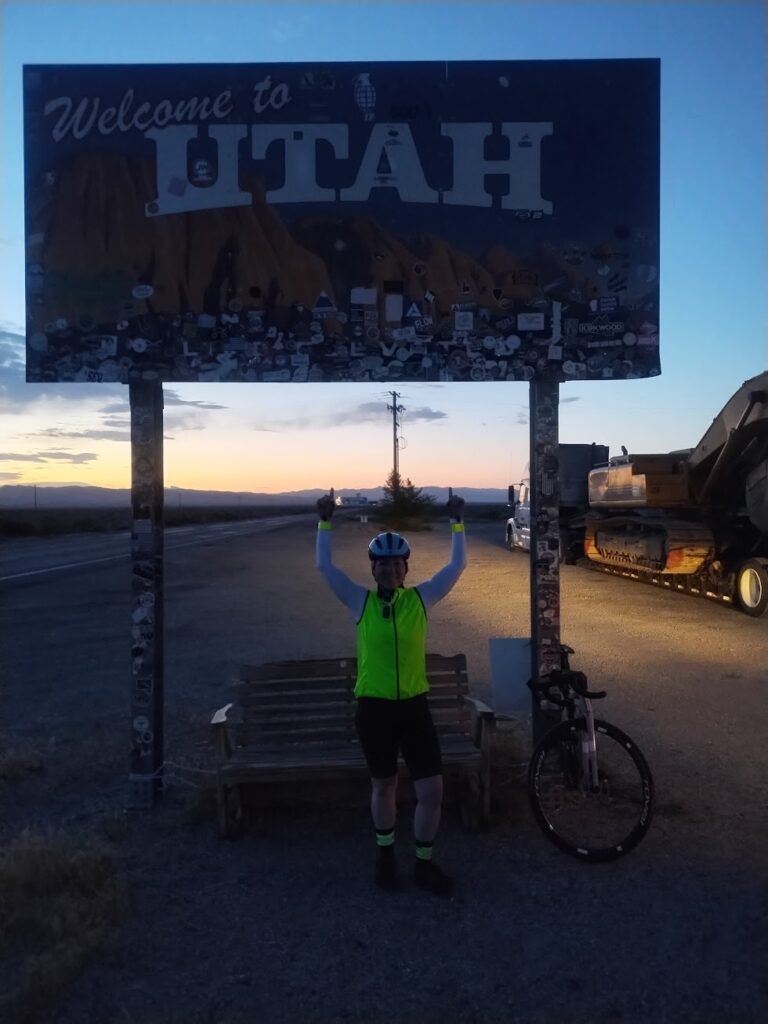
The attempt began on Sunday, May 24, 2026, just before sunrise at 5:49 a.m. at the Nevada/Utah border on Route 6/50. Conditions were mild, mid-to-high 50s with a light headwind, and I felt good at the start. I did miss an early problem: I was pushing more power than the speed and wind warranted, the result of a puncture. The tubeless system sealed this on its own, but the lower pressure created extra resistance and it took me too long to realize what the issue was. At mile 25, we discovered the low pressure and aired the tire, and from that point the rolling was easier.
The early miles were encouraging. Wind forecasts suggested mainly a tailwind or cross-tailwind for much of the route, and this was true for that first stretch. My pace across the open, flatish desert terrain felt good and I was meeting my pace targets.
But the ride became increasingly challenging. The first issue arose around hour eight or nine, when I began to have difficulty eating, something I usually have no trouble with. I had brought a full selection of my usual nutrition (drink mix, electrolytes, gels, thin ham on white bread, snacks), but my stomach rejected most of it. I tried to eat, but had to rely increasingly on the only things I could keep down, and then only barely – water, Coke, and gels. A nutritional deficit compounded as the miles added up. In hindsight, I think I went out too hard in that first century. The low tire pressure meant I was pushing extra power at my planned speed for that very first part, and more importantly, I set overly optimistic pace targets, which meant I was going harder than I should have so early on.
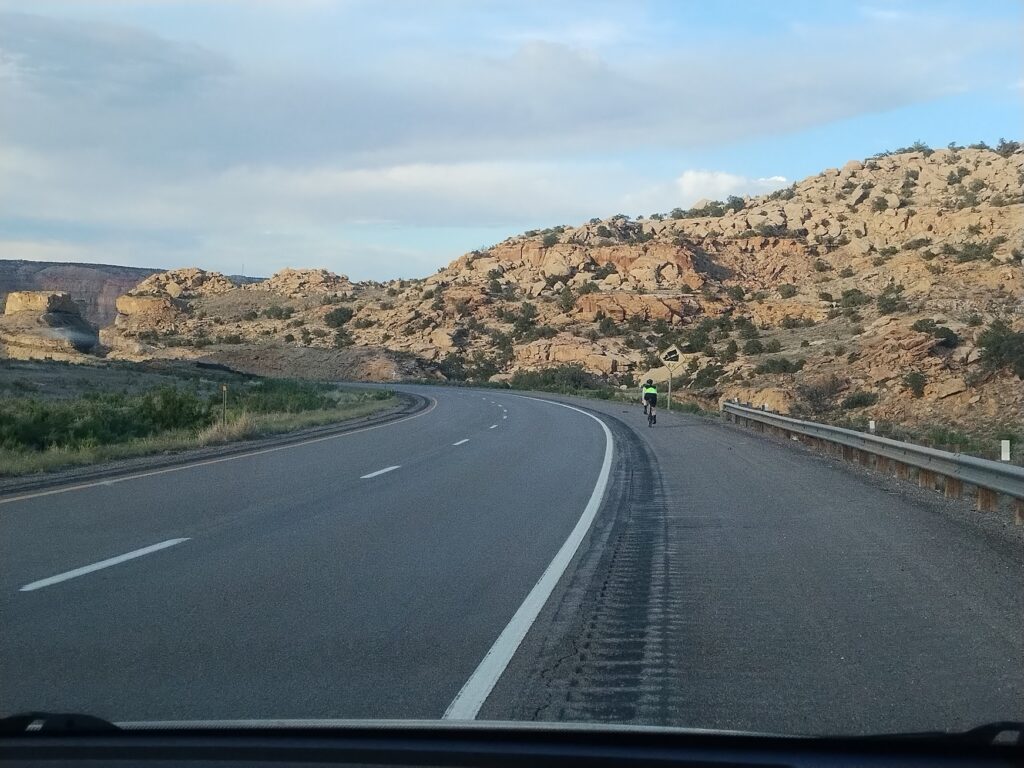
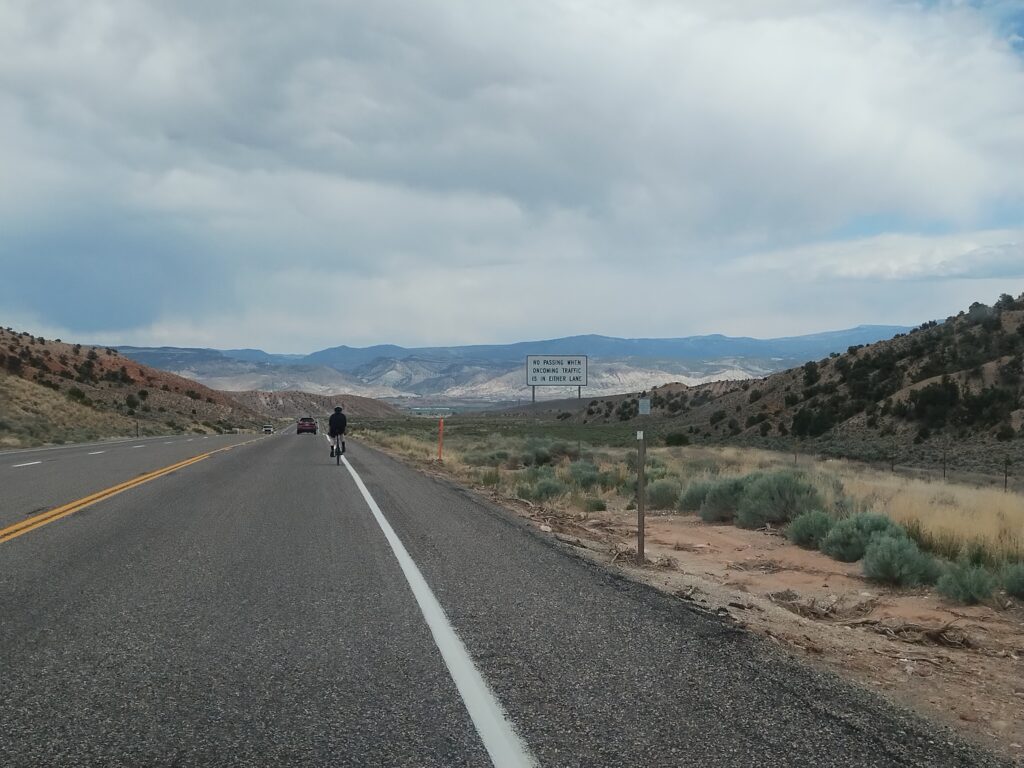
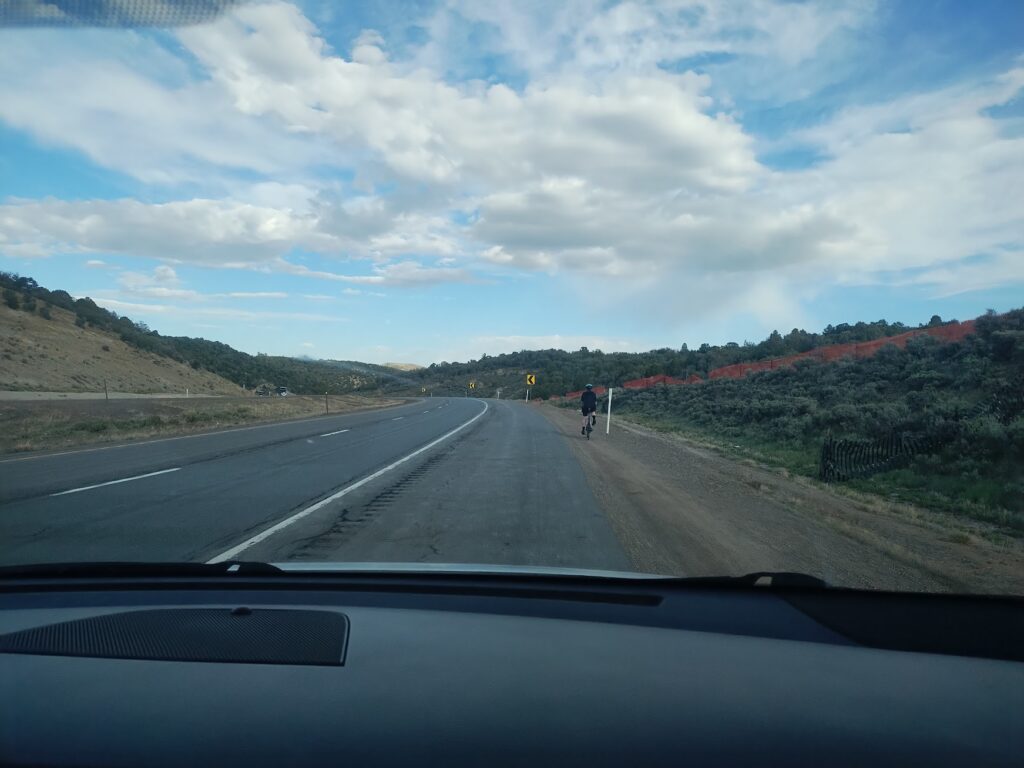
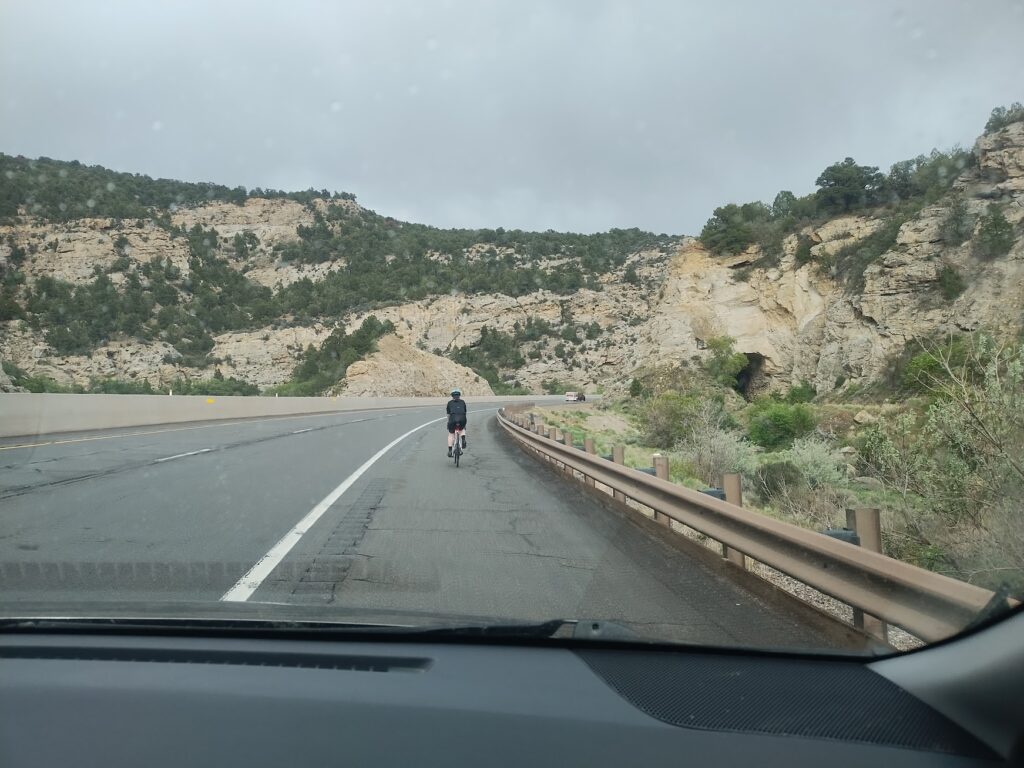
The most demanding stretch of the route was leaving Salina, where I-70 climbs nearly 30 miles to Emigrant Pass at 7,900 feet and the high point of the route at mile 185. The area has a reputation for dramatic scenery, but around 6pm, an unexpected rainstorm moved in with stronger headwinds and gusts, and I just kept my head down and pedaled. As is usual in Utah, the storm passed quickly and the weather cleared. At the top of the climb, the temperature was moderate, the wind died down, and the route opened up to a long descent through striking striated formations of white sandstone and red rock, followed by a challenging climb up the San Rafael Swell.
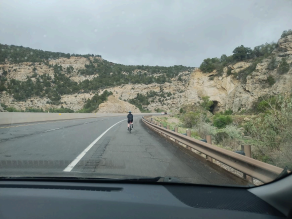
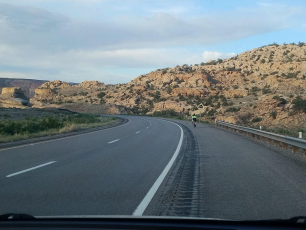
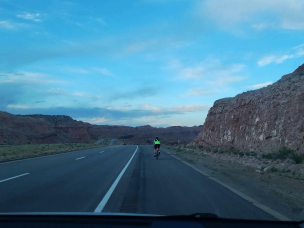
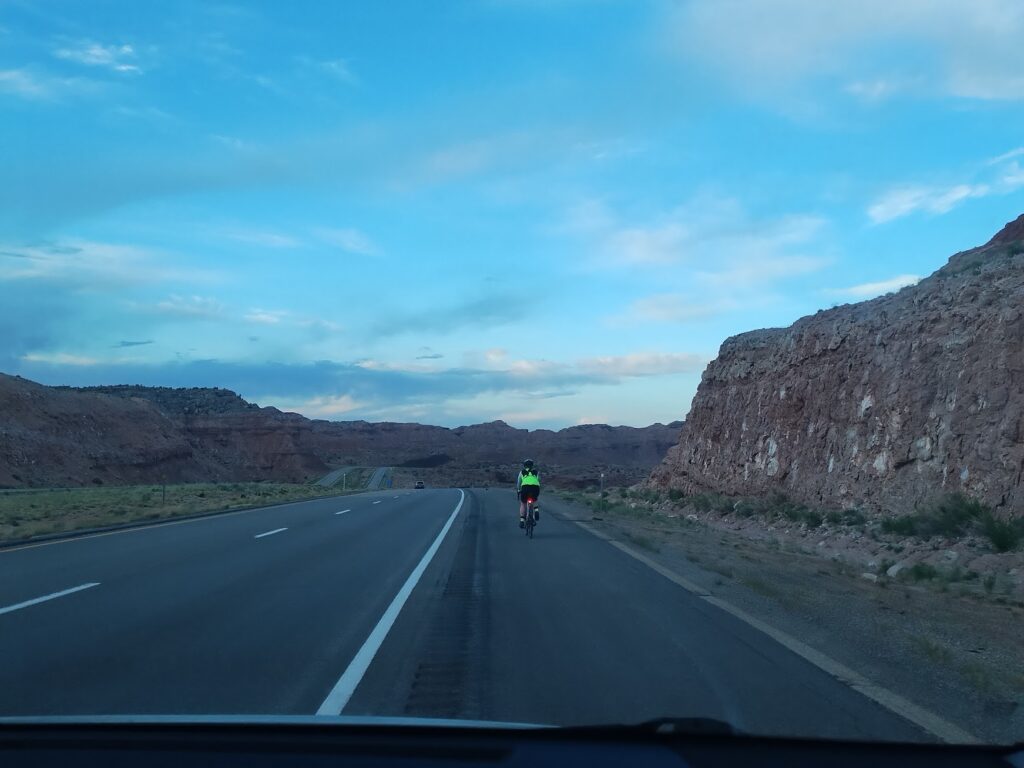
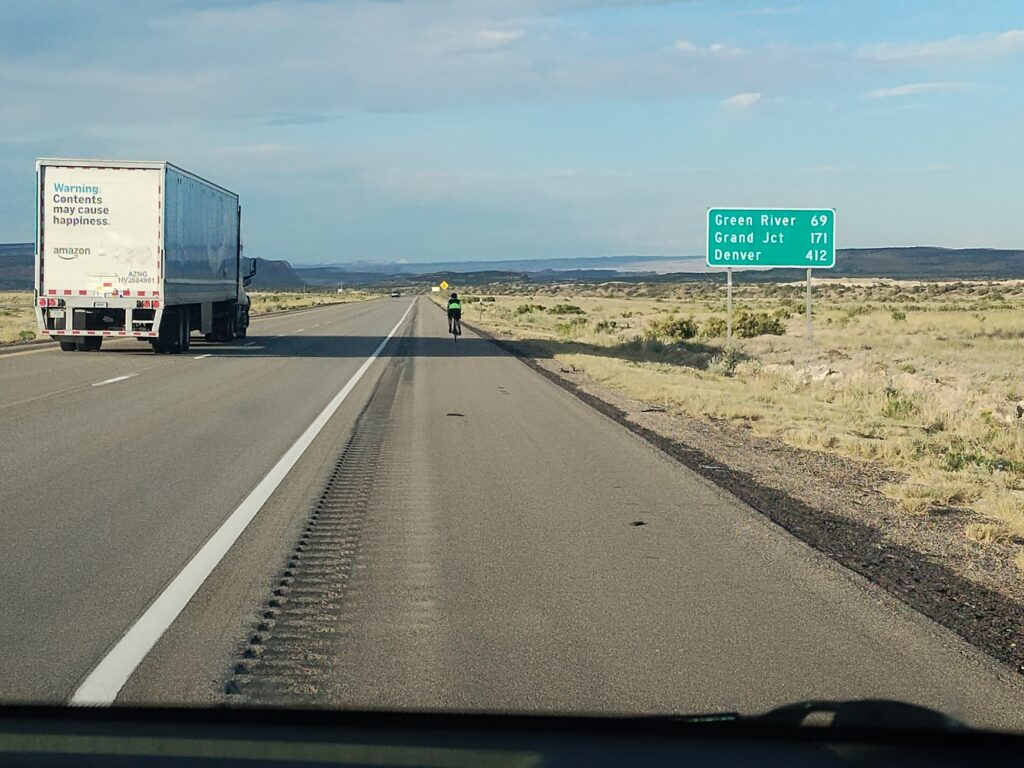
Before the ride, I had worried about I-70 with its high-speed cars and trucks. The reality was significantly better than expected. For most of the interstate, a smooth six-foot shoulder separated from traffic by a rumble strip made the riding feel safer and more comfortable than I had expected, and the sparse traffic thinned further as the night wore on. The road did have some surprises. At one point, a silver fox appeared to be sitting calmly on the side of the road, only to be alarmed by the unusual presence of a bike rolling into its territory. There were tire treads, road gators, scattered throughout the shoulder. During the day, these were easy to avoid, but on the nighttime downhills, even with my light on its “turbo” setting and the follow-vehicle’s headlights helping out, the combination of speed and darkness made them harder to navigate. The long descent off the San Rafael Swell, from miles 225 to 250, was especially challenging and I had to stay alert and on the brakes so I wouldn’t outrun my lights and crash on a road gator or other debris in the shoulder.
The ride into and past Green River was calm, and it was beautiful riding in the clear night under the bright moon and stars. The final 35 miles, ridden from about 3 a.m. onward, were the hardest. A mild but noticeable headwind had settled in, and the power I could put into the pedals didn’t translate to much forward movement. But I knew I could keep pedaling, and it was encouraging to remind myself that if I just kept doing that, I would finish.
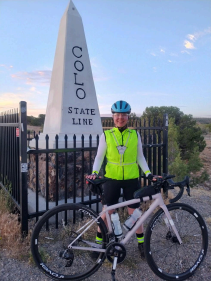
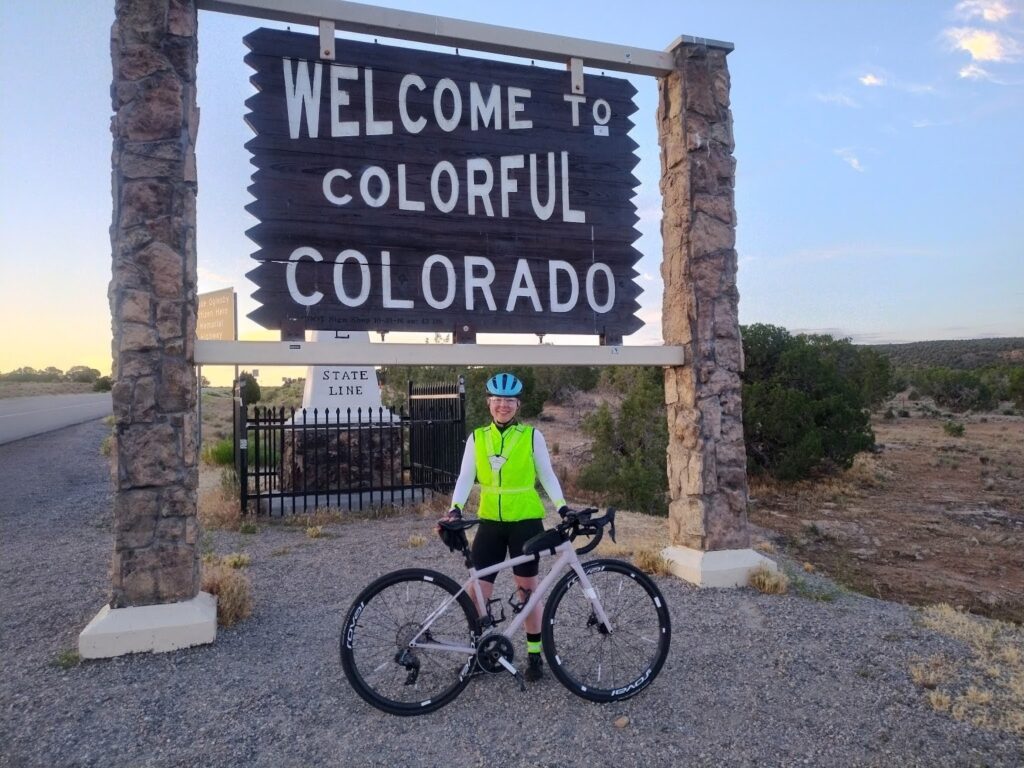
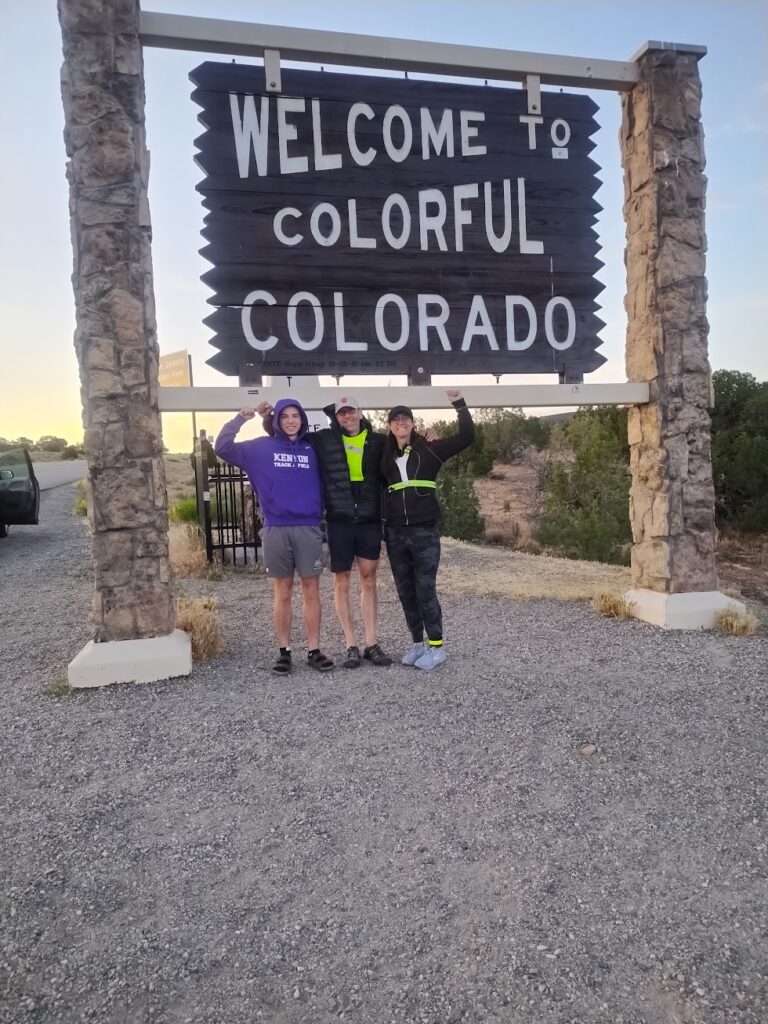
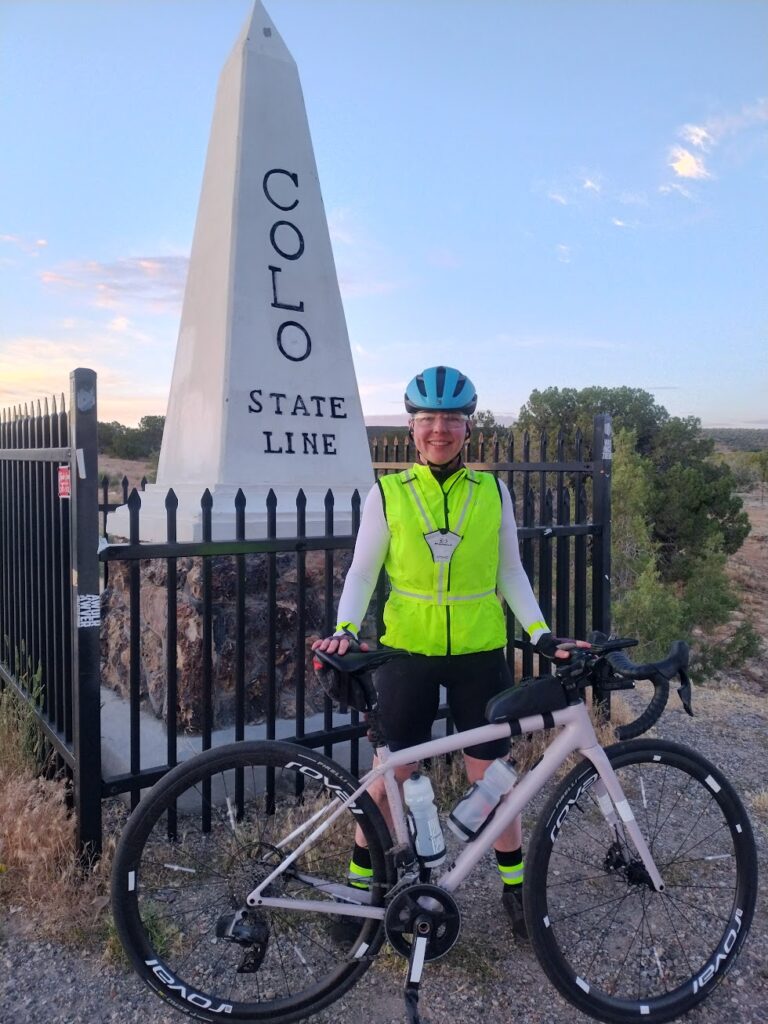
I arrived at the Utah/Colorado border on Monday, May 25, 2026, as the sun was rising, at 5:55 a.m. The moving time was 22 hours, with just over two hours of stops. Before the attempt, I had planned for 21 hours of riding and one hour of stops. That initial plan was plainly too optimistic, but the storm, the unexpected headwinds, and the nutrition difficulties also added time.
Before the ride, I contacted Benjamin (Jay) Fichialos, one of the pair who set the men’s 2x relay record on this route in 2021. I followed their exact route, which worked well, and I was relieved when it became apparent the actual elevation was less than the predicted elevation on the original map. Jay told me about the site, Rando Plan and it’s worth noting that this free site predicted my moving time with astonishing, to-the-minute precision and far more accurately than other tools I used.
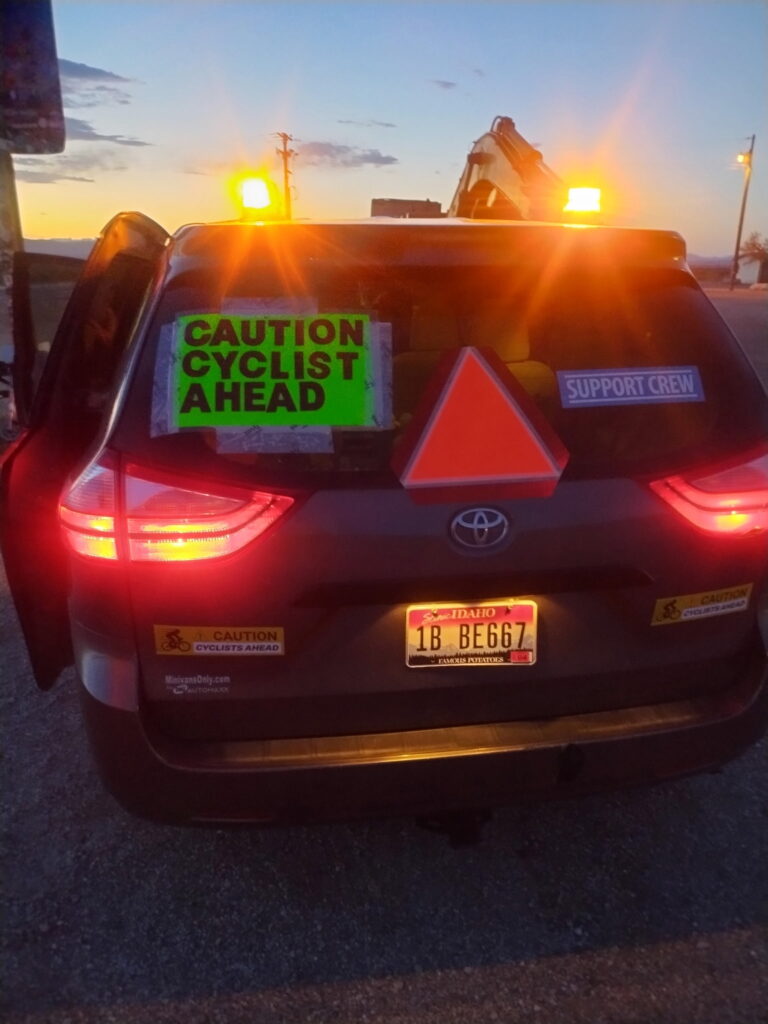
My support crew, Amy Drake, Jim Skidmore, and Adam Skidmore, were with me for the whole 24-hour effort. Amy and Jim also registered and trained as WUCA officials, trading off crewing and officiating duties through the ride to ensure the attempt would meet documentation requirements. I could not have done this without them, and I appreciated their steadiness throughout — the reminders to eat, the encouragement at low moments, and their attention to small, practical details, like reminding me to change my headphones or put on my safety glasses at night.
I hope this record encourages other women to pursue the many cross-state records still unset across the Western U.S. But, in the end, what drove this attempt was simple and more personal: I set a challenge for myself and I wanted to meet it.
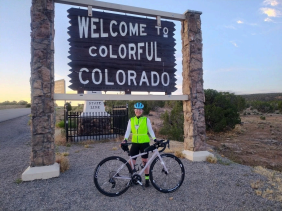
Attempt Tracking and Recording:
The officials kept a log of the ride and the ride was also tracked through Follow My Challenge: “Jessica Winston Cross Utah.”
I also recorded the ride on my Garmin Edge 1040 Solar, but frustratingly, I was so tired that I forgot to stop and save the ride when I got to the border. The Garmin kept recording stoppage time for an additional 25 minutes and an additional .1 miles in the car before I realized the error. The activity is viewable on Strava. Because it was uploaded immediately from Garmin when I finally did save, the Strava activity includes this additional stoppage time and distance. The officials did get the official end time and I trimmed the Garmin file to match the actual end point and time of the ride, and that file is viewable on Garmin Connect, activity 23007170211.